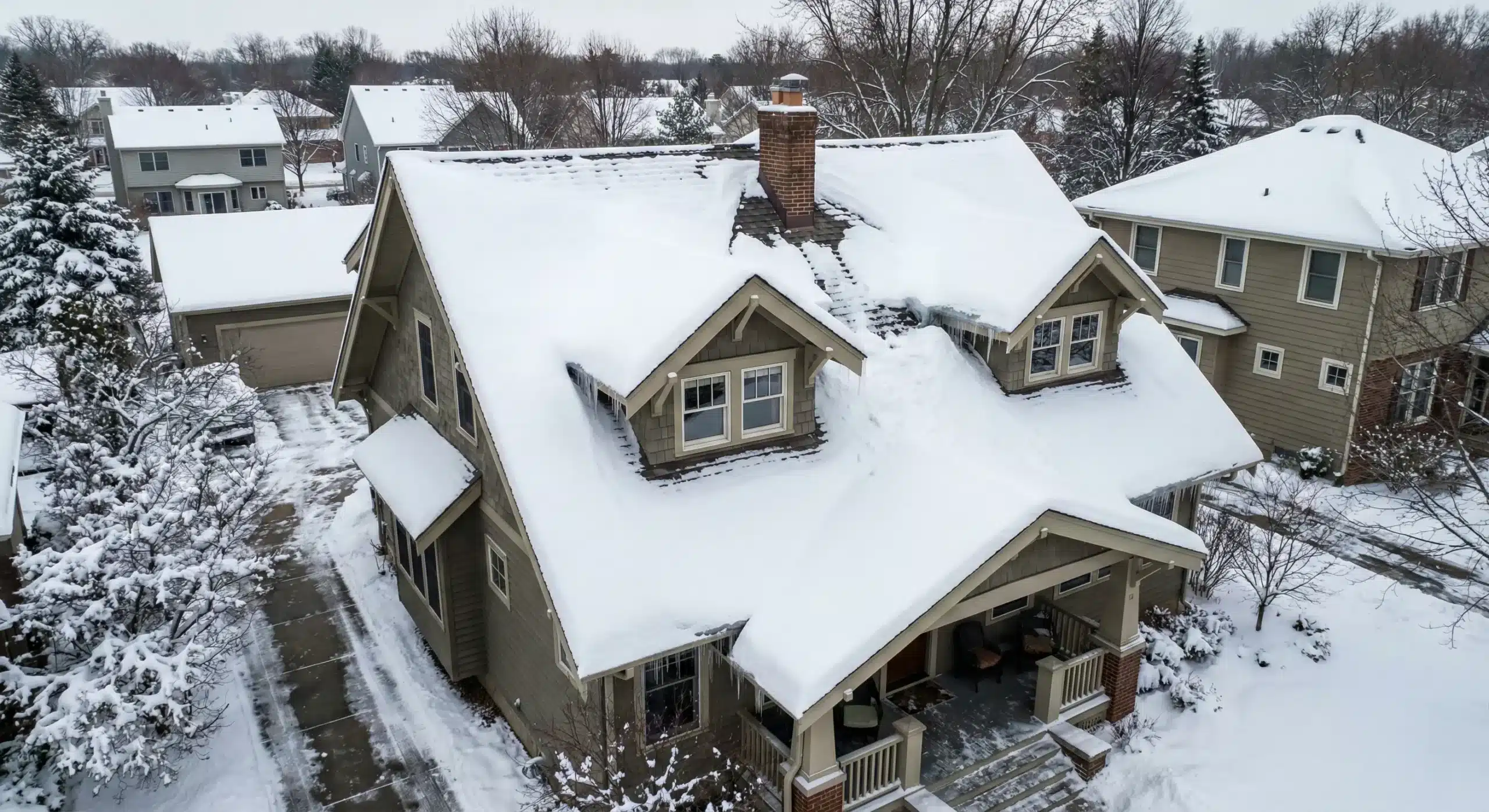
Signs You May Need a New Roof in Winter (and What Snow Damage Can Do)
Winter puts roofs to the test. Snow, ice, and freeze-thaw cycles can turn small weak points into leaks. Some roof problems only show up when temperatures drop.
This article covers common winter warning signs and the types of snow damage that can lead to a roof replacement.
Why winter reveals roof problems fast
Snow and ice do two things that stress a roof:
- They add weight. Wet snow is heavy and can strain older roof systems.
- They trap water. Ice and refreezing meltwater can push water under shingles and flashing.
If your roof is already near the end of its life, winter can make that obvious.
Signs you may need a new roof in winter
1) Leaks or water stains after a storm
A drip during or right after snowfall is a strong warning sign. Look for:
- brown stains on ceilings or walls
- damp drywall around skylights or chimneys
- wet insulation in the attic
One leak does not always mean full replacement. But repeated leaks often point to a roof that is worn out.
2) Ice dams along the roof edge
Ice dams form when snow melts higher on the roof and refreezes near the edge. That ridge of ice can block drainage. Water can then back up under shingles.
Signs of ice dam issues include:
- thick ice at the eaves
- large icicles on gutters
- water spots near exterior walls
Ice dams can damage shingles, underlayment, soffits, and gutters. They can also lead to hidden rot.
3) Missing, cracked, or curling shingles
Cold makes roofing materials less flexible. Wind and ice can finish the job.
In winter, check for:
- shingles that look lifted or curled
- cracked tabs
- bare spots where shingles are missing
- granules collecting at downspout exits
If you see widespread shingle wear, repairs may not last long.
4) Sagging roof lines or soft spots
A roof should look straight. A dip or sag can signal:
- moisture damage in the roof deck
- weakened rafters or trusses
- heavy snow load stressing the structure
If a roof feels soft underfoot (do not walk on it in winter), that can mean the decking is failing. This is one of the clearest signs a replacement may be needed.
5) Attic moisture, frost, or “it’s raining in my attic”
Attics should stay dry. In winter, poor ventilation and heat loss can cause condensation. That moisture can look like:
- frost on nails
- damp wood
- moldy smells
- wet insulation
This problem can also drive ice dams. A roof system may need more than new shingles. It may need ventilation and insulation fixes to prevent repeat damage.
6) Flashing problems around chimneys, vents, and skylights
Flashing is the metal that seals roof joints. Snow and ice stress these areas.
Signs include:
- leaks near chimneys or skylights
- loose metal edges
- cracked sealant
- staining around vent pipes
If flashing failures are frequent and the roof is older, replacement often makes more sense than patching.
7) Your roof is near its expected lifespan
Many roofs in New Jersey hit the “watch closely” stage around:
- asphalt shingles: often 15–30 years, depending on quality and ventilation
- wood shakes: varies widely and needs close inspection
- flat/low-slope roofs: depends on the system and maintenance
Age alone is not proof. But an older roof plus winter symptoms is a strong combo.
What snow and ice can damage on a roof
Snow load stress
Heavy snow can strain:
- roof decking
- rafters and trusses
- fasteners and connectors
This can show up as sagging lines, new cracks in drywall, or doors that stick from minor structural shift.
Freeze-thaw cracking
Water gets into small gaps. It freezes, expands, then melts. That cycle can:
- widen cracks in shingles
- loosen nails
- break down seal strips
- open seams on low-slope roofs
Ice dams and water backup
Ice dams can force water under the roofing. That can damage:
- underlayment
- roof deck
- fascia and soffits
- interior drywall and insulation
Gutter and edge damage
Ice and heavy snow can pull on gutters and drip edges. You might see:
- gutters pulling away from the fascia
- bent metal edges
- broken downspouts
- water dumping near the foundation when things thaw
What to do if you suspect winter roof damage
Check the safe areas first
You can inspect without climbing:
- look for missing shingles from the ground
- check ceilings and attic for stains
- watch for ice dams at the roof edge
- check gutters for sagging or separation
Avoid walking on a snowy or icy roof.
Act fast on active leaks
A small leak can soak insulation, stain ceilings, and lead to mold. Early repair also prevents damage from spreading into framing.
Get an inspection if you see more than one warning sign
When problems stack up, patchwork often turns into repeat calls. An inspection helps you decide if repair makes sense or if replacement is the safer long-term move.
Schedule a roof inspection with Carl’s
If you’re seeing leaks, ice dams, missing shingles, or sagging areas, Carl’s can inspect your roof and explain what’s going on. We’ll tell you what can be repaired now and when a full replacement is the smarter option.
Contact Carl’s to schedule a roof inspection or Get a Free Estimate.
Related Posts
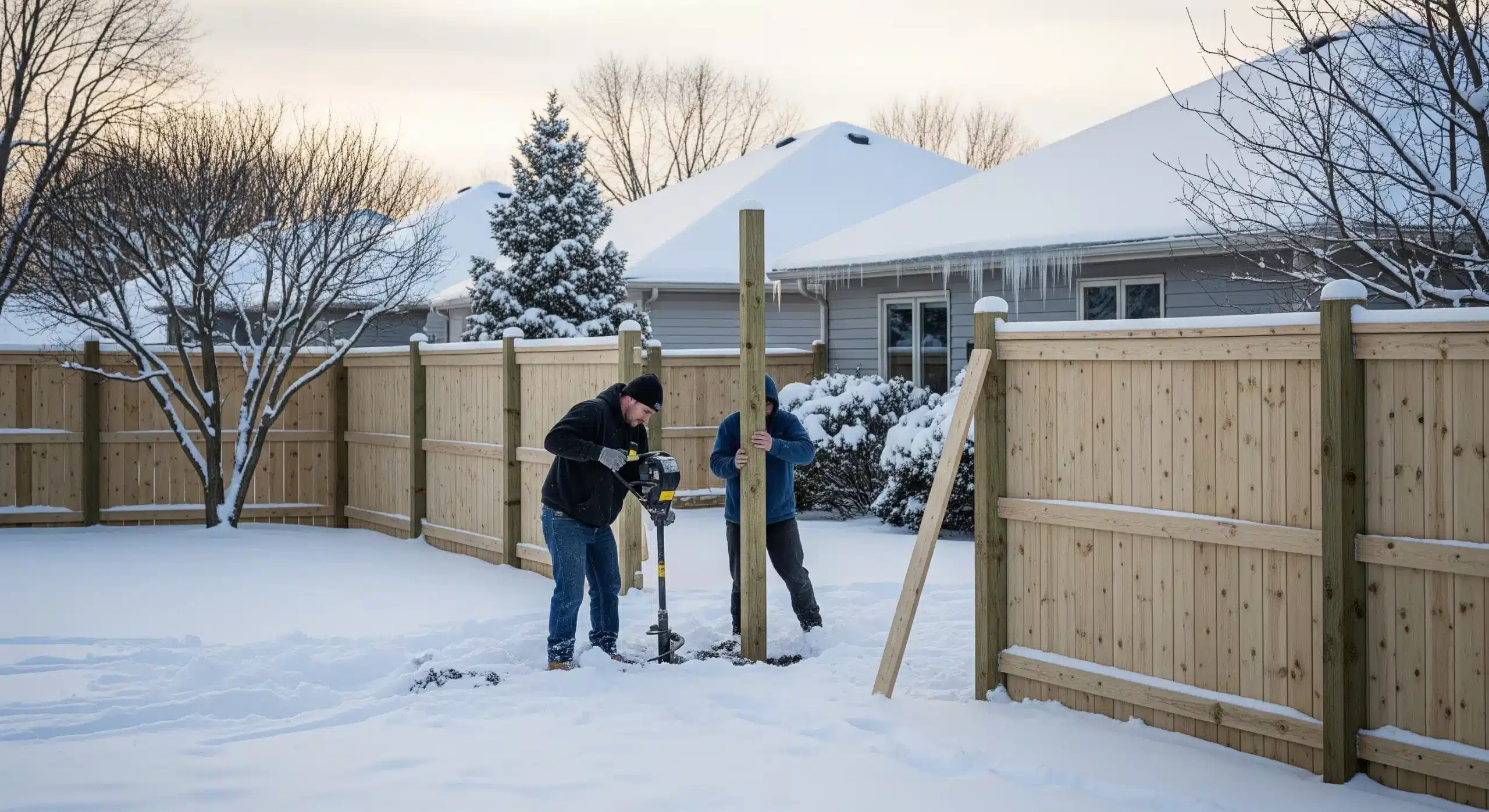
Can You Install a Fence in Winter in NJ? What Homeowners Should Know
Yes, you can often install a fence in winter in New Jersey. A lot of…

Split Rail Fence: Timeless Charm Meets Practical Fencing
There’s just something about a split rail fence that feels like home, isn’t there? Maybe…

Planning To Install a Pool? Don’t Overlook the Fence!
You’ve meticulously planned and budgeted for every detail pertaining to your new pool installation, from…