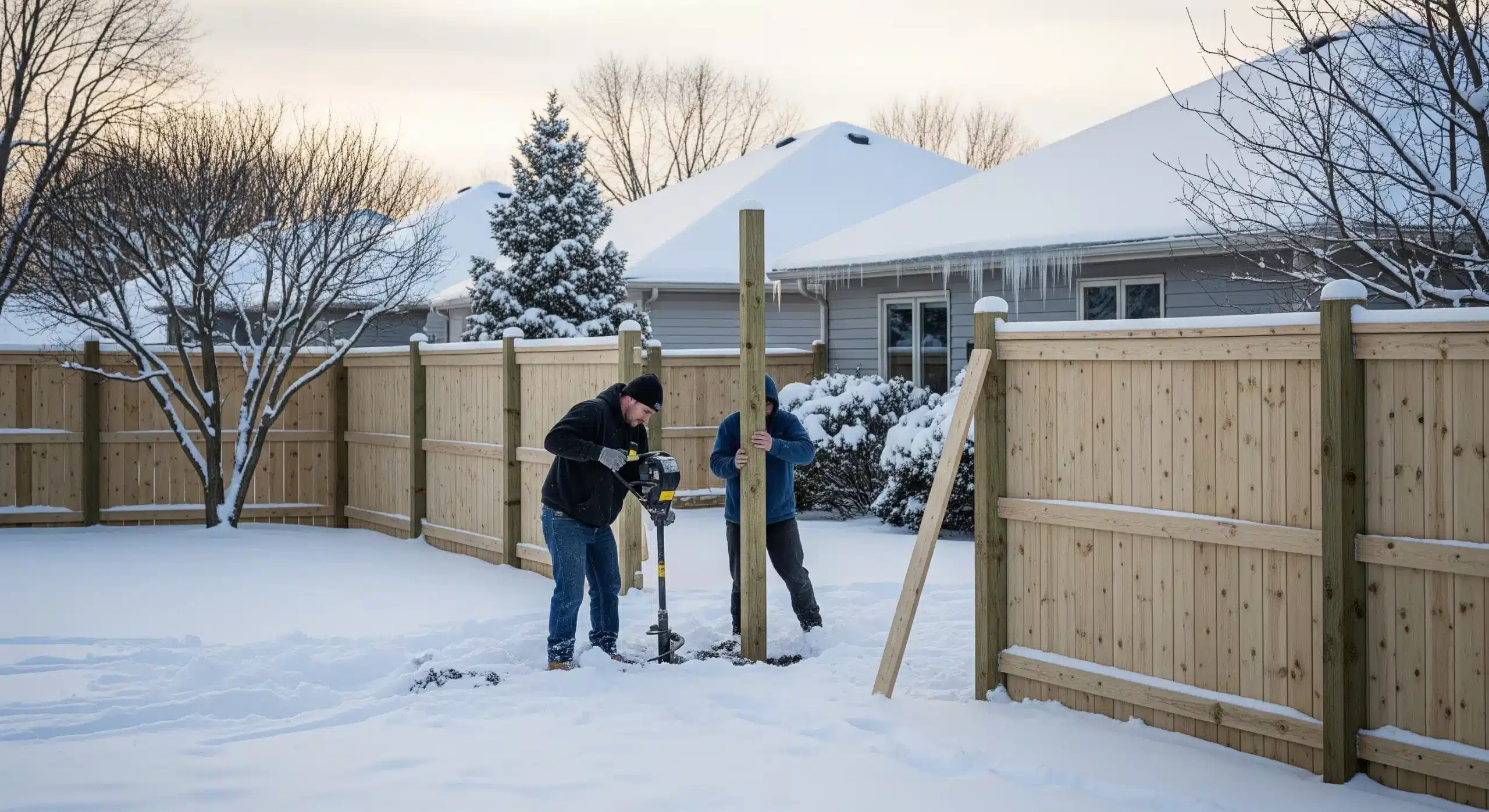
Yes, you can often install a fence in winter in New Jersey. A lot of people assume you have to wait until spring, but that is not always true. The bigger issue is not the calendar. It is what your yard is doing that week.
Winter can be a good time to build if the ground is workable and we can lay out the line clearly. If the soil is frozen hard or the yard is saturated, the job can slow down or it may make sense to wait for a better window.
Below is what matters most, what can delay the job, and how to plan it.
When winter fence installation is usually possible
Most winter installs work out when the yard is cold but still workable. If we can dig to the right depth, set posts correctly, and keep the work area safe, a winter install can look and perform the same as a spring install.
In NJ, we often get mild stretches between storms where the top layer softens and the ground stays stable enough to work cleanly. Those are good days to install.
Winter installs are usually possible when:
the yard has safe access for materials and tools
- the ground is not frozen solid
- utility markings are visible and accessible
- we can dig to proper depth without forcing it
- we can set posts and keep them stable while concrete cures
What can delay a winter fence install
Winter does not ruin fence installs. Poor ground conditions do. Here are the most common reasons we slow down or reschedule, and what they look like.
1) Frozen ground
Frozen soil is the biggest factor. If the frost gets deep, digging clean post holes becomes slow and difficult. If someone cuts corners and sets posts too shallow, the fence can lean or move when the ground thaws and shifts.
If your yard feels like you are trying to chip through concrete, that is the same problem we face.
You will often see this when:
- the ground stays hard for days, even after a warmer afternoon
- water sits on the surface because the soil will not absorb it
- digging a few inches down is already a struggle
2) Saturated yards and mud
Thawing weather can be worse than cold weather. When snow melts and the yard turns soft, it is harder to keep lines straight and it is easier to tear up the lawn.
Sometimes the best move is letting the yard drain for a couple days. That small delay can lead to a cleaner install and less damage to the property.
3) Snow cover hiding layout points
Layout is a big part of a good fence job. We need to see where the fence should go and confirm what is in the way. Deep snow can cover property pins, grade changes, edging, and obstacles that affect the fence line.
Light snow is usually manageable. Deep snow can make it hard to lay out the job accurately, and accuracy matters.
4) Short daylight and cold-weather cure times
Concrete can still be used in winter, but it cures slower in cold temperatures. We plan around daytime highs and overnight lows. This does not mean the job cannot be done. It means the schedule needs to match the weather.
Does winter change the quality of the install?
Not if the job is done under the right conditions. A fence installed in February should not look like a winter fence. The quality comes down to basics, not the season.
A solid install depends on:
- digging to the proper depth
- straight layout with consistent spacing
- solid post setting and stable cure time
- managing drainage around the post holes
If any of those get compromised, the fence suffers in any season
Fence types and winter: what matters most
Different materials handle cold weather differently, but post setting is still the main factor.
Vinyl fences
Vinyl can be installed in winter. Cold weather makes vinyl less flexible during handling, so installation needs care to avoid stressing parts. Clean layout also matters because changes in grade can be harder to see under snow.
Wood fences
Wood fences are common winter installs. Wood itself is not the issue. The issue is soil movement and water in the ground.
Gate alignment is also important. If posts shift later due to poor setting or drainage, gates are often the first place you notice it.
Aluminum fences
Aluminum often installs well in winter because panels are stable and lighter to handle. As long as posts can be set properly, winter is usually fine for aluminum.
Will posts heave more if installed in winter?
Heaving is mostly a drainage and depth problem, not a winter install problem. Posts heave when water sits in the soil, freezes, expands, and pushes upward. This is more common in clay-heavy soil and low spots where water collects.
A fence is more likely to heave if:
- posts are too shallow
- the soil holds water
- water collects around post holes
- downspouts dump water near the fence line
The fix is correct post depth and better water control.
Benefits of installing a fence in winter
Winter installs can be a smart move if you want the fence ready for spring.
Common benefits include:
- less competition for spring scheduling
- the fence is ready sooner for pets, kids, or privacy
- more flexible install windows in many cases
- dormant landscaping means fewer obstacles along the fence line
If you already know you want a fence this year, winter can help you get ahead of it.
How to plan a winter fence install
Winter planning is mostly about keeping the fence line visible and staying flexible with weather.
1) Confirm your property line first
If you have a survey, that helps. If you are unsure where the line is, it is worth confirming before digging. Many fence problems come from unclear boundaries.
2) Clear the fence line if possible
If snow is on the ground, clearing the path where the fence will go makes layout easier and speeds up work. Even a narrow cleared strip helps.
3) Expect weather-based scheduling
Winter work is based on short weather windows. A mild stretch can be a good time to install. A sudden freeze can push it back. That is normal in NJ.
4) Plan for minor yard touch-ups if it is wet
If the ground is soft, some lawn repair in spring can happen. We aim to minimize impact, but weather plays a role.
Get a winter fence estimate from Carl’s
If you are thinking about a fence and wondering if winter is realistic for your yard, Carl’s can take a look and give you a clear answer based on your soil, slope, and access. Contact Carl’s to Get a Free Estimate.