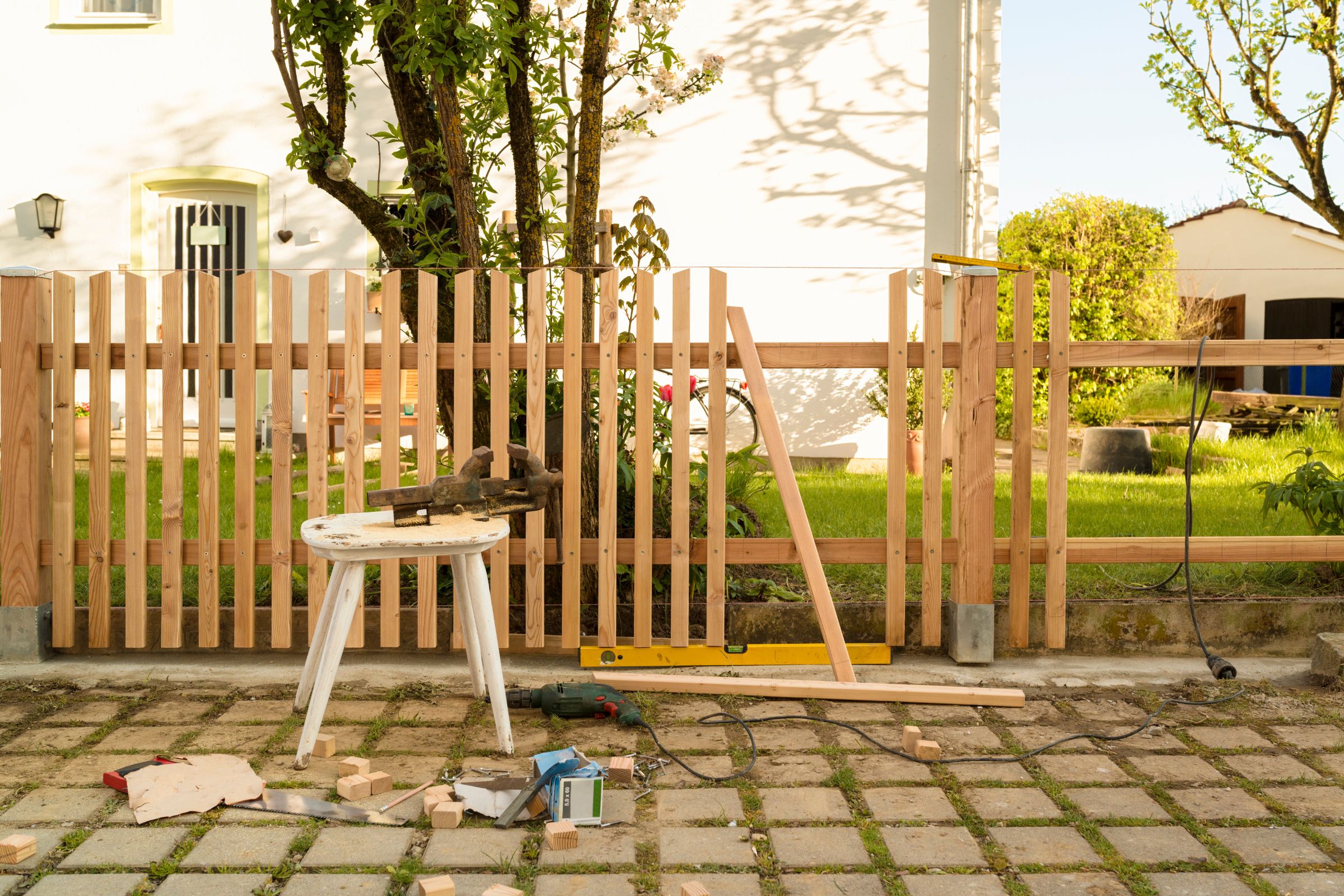
A fence is one of those things homeowners do not think much about until it starts looking rough. At first, it may just be a loose board, a gate that sticks, or a section that leans a little more than it used to. Then one day you look outside and realize the whole fence has gone from aging to actively embarrassing.
The truth is, fences do not last forever. Weather, moisture, insects, shifting soil, and simple wear over time all take a toll. If your fence is showing its age, it may be time to stop patching the same problems and start thinking about replacement.
Here is how to know when an old fence has reached the point where replacing it makes more sense than repairing it.
Why old fences fail over time
Even a well-built fence is exposed to the elements every day. In New Jersey, that means heat, humidity, rain, wind, snow, and freeze-thaw cycles that wear materials down year after year.
Wood fences can rot, warp, split, and attract insects. Metal fences can rust or loosen. Vinyl fences can crack or become brittle over time. Posts can shift as the ground settles. Hardware can weaken. Gates can sag. Little problems add up, and eventually the fence stops doing the job it was built to do.
That job is not just about appearance. A fence should provide privacy, security, structure, and peace of mind. Once it stops doing those things reliably, replacement is worth considering.
Your fence is leaning in multiple areas
One leaning section does not always mean the whole fence needs to go. Sometimes a single post can be repaired or replaced. But if you notice multiple sections tilting, bowing, or pulling out of line, that is a bigger warning sign.
A fence that leans in several places usually points to widespread post failure, shifting ground, or structural weakness across the system. At that point, continuing to patch one area at a time often turns into an ongoing cycle of repairs that never fully solves the problem.
If your fence no longer stands straight and secure across the property, replacement may be the smarter long-term move.
Posts are rotting, loose, or unstable
Fence posts are the foundation of the entire structure. When the posts start failing, the fence starts failing with them.
Signs of post trouble include:
- wobbling when touched
- visible rot near the base
- posts pulling away from the soil
- cracked or split wood
- rusted metal posts
- sections that shift during wind
Post issues are especially common in older wood fences where years of moisture have worn down the material near ground level. If several posts are failing, repairing isolated sections may not be enough to restore the fence properly.
Boards, panels, or pickets keep breaking
A damaged board here and there is normal over time. But when broken pickets, cracked panels, and loose rails start becoming a regular problem, it may be a sign that the fence has simply reached the end of its useful life.
This is especially true if the damage is spread across different sections rather than limited to one spot. When materials become brittle, warped, or weathered throughout the fence, repairs can become more cosmetic than practical.
A newer fence can often be repaired effectively. An older fence with repeated material failure usually becomes more expensive to keep patching than it is worth.
The fence has visible rot, insect damage, or decay
Wood fences are especially vulnerable to long-term moisture exposure and insect activity. Rot can begin in one area and spread farther than homeowners realize. Termites and other insects can also weaken the wood from the inside out.
Common signs include:
- soft or crumbling wood
- discoloration near the base of posts
- boards that split easily
- holes or tunneling from pests
- areas that stay damp or dark
Once rot or insect damage is widespread, replacement is usually the better option. Trying to repair a heavily compromised fence often means replacing so many parts that the original structure is barely worth saving.
Your gate sags, drags, or no longer closes properly
A gate that sticks once in a while is annoying. A gate that drags, sags, will not latch, or has to be lifted every time you use it is usually a sign of deeper structural wear.
Sometimes the problem is just hardware. But in older fences, gate problems often happen because the surrounding posts have shifted, the frame has weakened, or the whole fence has fallen out of alignment.
If the gate is just one more symptom in a fence that already has other visible issues, replacement may make more sense than another temporary fix.
Repairs are becoming frequent and repetitive
One of the clearest signs that a fence needs professional attention is when the same problems keep showing up. Maybe it is a few loose boards this year, a gate repair next year, then a post issue after that. Maybe one section gets fixed, only for another area to start failing soon after.
That does not always mean replacement is the only answer, but it does mean it is worth taking a closer look at the fence as a whole. In some cases, targeted repairs can still extend the life of the fence. In others, the pattern of wear may show that investing in a new fence makes more sense long term.
A free estimate can help determine whether a repair is still the smart move or whether replacement would offer better value and reliability.
The fence no longer matches your needs
Sometimes a fence is not failing structurally, but it is still not doing the job you want it to do.
Maybe you want more privacy than the current fence provides. Maybe the style looks dated. Maybe the material requires more upkeep than you want to deal with. Maybe you need a stronger enclosure for kids or pets. Maybe you are improving the yard and the old fence now looks like it missed the memo entirely.
In some situations, repairs or updates can improve the look and function of an existing fence. In others, a new fence may be the better fit for your home, your lifestyle, and how you use the space. The right choice depends on what you want the fence to do moving forward.
Your fence hurts curb appeal
An old, worn-out fence can make the whole property look tired. Leaning panels, faded materials, missing boards, rust, staining, and visible repairs all affect how the home looks from the street and from the backyard.
For homeowners thinking about resale, that matters. For homeowners planning to stay put, it still matters. A fence should add to the appearance of the property, not make it look neglected.
Sometimes curb appeal can be improved with focused repairs and restoration. In other cases, a new fence creates a cleaner, more updated look. The best option depends on the overall condition of the fence and how much of the original structure is still in good shape.
Storm damage made existing problems worse
Sometimes a fence holds up for years until one strong storm pushes it too far. Heavy wind, fallen branches, saturated ground, snow load, or repeated winter weather can all make existing weaknesses worse.
If storm damage is limited to one area and the rest of the fence is still solid, a repair may be the right solution. But if the storm exposed more widespread wear, loose posts, or aging materials, it may make sense to look at larger repairs or replacement instead.
A good inspection can help separate isolated storm damage from signs of a fence that is wearing out more broadly.
Your fence is over 15 to 20 years old
Fence lifespan depends on the material, installation quality, maintenance, and weather exposure. But in general, age does matter.
A wood fence that is well maintained may last around 15 to 20 years, sometimes longer in the best conditions. Other materials may last longer, but even durable fences eventually show wear through posts, panels, hardware, and overall structural performance.
Age alone does not automatically mean a fence needs to be replaced. Some older fences are still good candidates for repair. But if an aging fence is showing multiple signs of wear at once, it is worth having it evaluated to see what makes the most sense.
Repair or replace? How to make the call
A repair may make sense when:
- damage is limited to one area
- the rest of the fence is in good condition
- posts are stable
- materials are still sound
- the fence still meets your needs
Replacement may make more sense when:
- multiple sections are leaning or failing
- rot or insect damage is widespread
- posts are unstable
- repairs are becoming frequent
- the fence looks worn out overall
- the style or material no longer works for you
The key is looking at the fence as a whole, not just the latest broken piece. A professional estimate can help you understand whether a repair will solve the issue or whether a new fence would be the better long-term option.
Get the right solution before bigger problems build up
An old fence usually does not fail all at once. Problems tend to build over time, and what starts as one loose board or sagging gate can turn into a larger issue if it is ignored.
If your fence is leaning, rotting, breaking down, or simply no longer doing its job the way it should, it is a good time to have it looked at. In some cases, a repair may be all that is needed. In others, a new fence may be the better investment.
At Carl’s, we help homeowners determine the best option based on the condition of the fence, the layout of the property, and the goals for the space. During your free estimate, our team can help you decide whether repair or replacement makes the most sense for your home.
Contact Carl’s today to schedule your free estimate and get the right fencing solution for your property.