For most NJ homeowners, standing seam steel offers the best balance of cost and durability, copper delivers the longest lifespan and highest resale appeal but at 3-4x the price, and “tin” roofing is largely a legacy term that today usually means coated steel rather than an actual distinct material. Which type of metal roofing makes sense depends on your budget, your home’s architectural style, and how long you plan to own the property.
Clearing Up the “Tin Roof” Confusion First
Actual tin roofing hasn’t been commercially common since the early 1900s — what people call a tin roof today, especially on older Victorian and farmhouse-style homes in towns like Flemington or Lambertville, is almost always galvanized or galvalume steel with a protective coating. The name stuck around from an era when tin-plated iron was standard, but if a contractor quotes you a “tin roof” now, ask directly what metal and coating you’re actually getting, because the term alone doesn’t tell you much.
The Three Real Options in NJ
- Copper — solid copper panels or shingles, develops a natural green patina over 15-20 years, 50-100+ year lifespan
- Standing seam steel — galvanized or galvalume steel with a baked-on paint or PVDF coating, 40-60 year lifespan
- Coated steel (the modern “tin” equivalent) — similar base material to standing seam but often in a shingle or shake profile rather than vertical panels, 30-50 year lifespan
Copper: The Premium, Long-Term Choice
Copper is the material homeowners choose when they’re not planning to touch the roof again in their lifetime. It doesn’t rust, it resists the salt air along the Jersey Shore better than almost anything else on the market, and its patina — that blue-green finish you see on older homes in towns like Cape May — actually protects the metal rather than signaling decay.
- Installed cost: roughly $18,000-$35,000+ for a 2,000-square-foot roof, depending on panel style
- Lifespan: 50-100+ years, with many historic examples still functional after a century
- Best suited for: shore properties dealing with salt corrosion, historic homes in districts like Cape May’s, and owners planning to stay long-term or pass the home down
The tradeoff is upfront cost and installation complexity — copper requires a specialized crew, since soldering seams correctly takes real expertise, and a bad installation shows up as leaks within a few years rather than decades.
Standing Seam Steel: The Practical Middle Ground
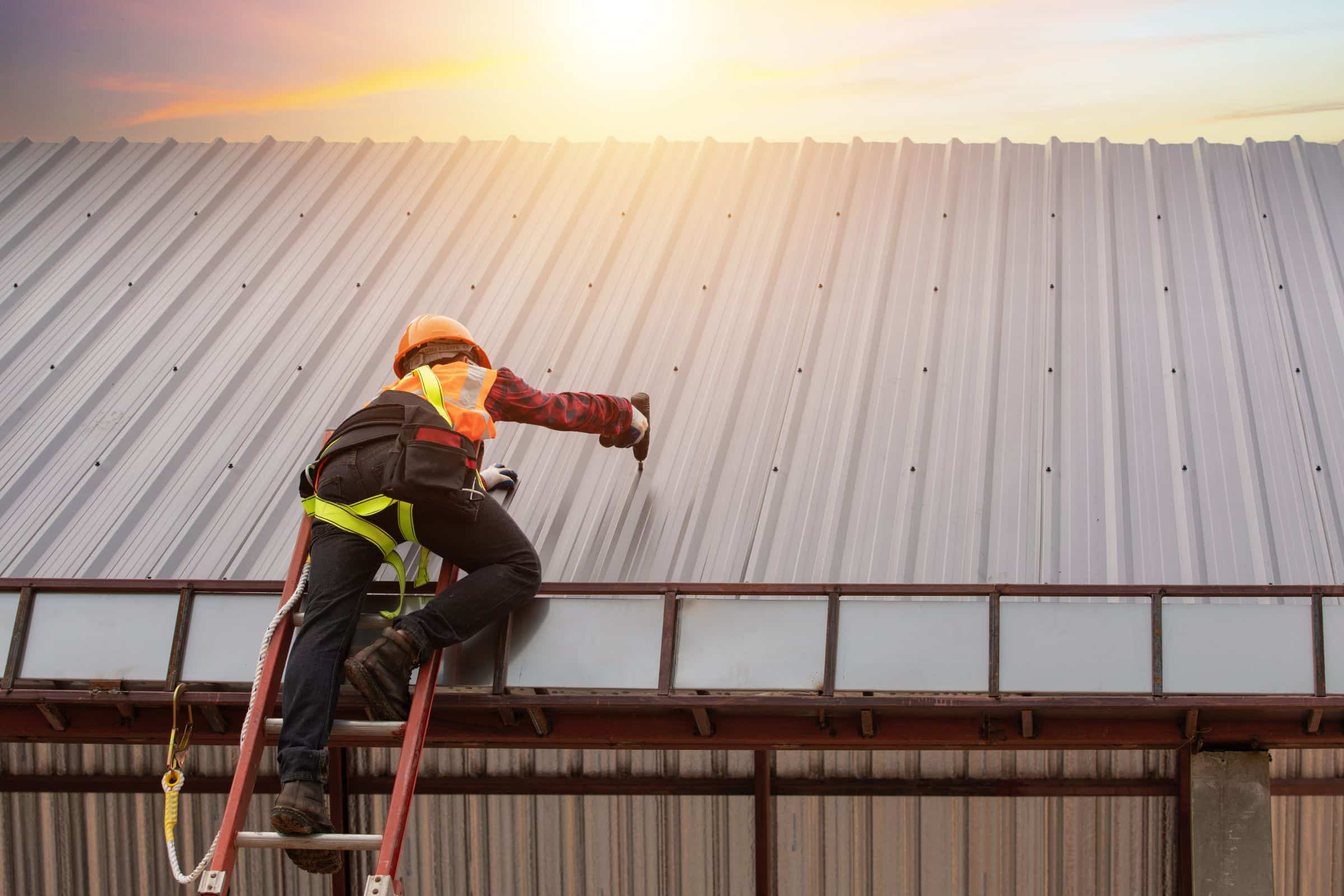
This is what most NJ homeowners land on when they want metal’s durability without copper’s price tag. The vertical panel look has also become popular on newer construction and additions, not just as a repair choice — it reads as more modern than shingles, which is part of why you’ll see it on renovated capes and contemporary builds alike from Montclair to Collingswood.
- Installed cost: roughly $12,000-$20,000 for a 2,000-square-foot roof
- Lifespan: 40-60 years, with PVDF-coated panels (like Kynar 500) holding color better over time than cheaper polyester coatings
- Snow performance: the smooth vertical panels shed snow load faster than shingled roofs, which matters in North Jersey towns that see heavier accumulation, like those in Sussex or Morris County
- Energy impact: reflective coatings can reduce summer attic heat gain, sometimes qualifying for NJ Clean Energy Program rebates depending on the specific product’s solar reflectance rating
Coated Steel Shingles: The Budget-Conscious Metal Option
If you want metal’s longevity but aren’t sold on the standing seam look — or you’re trying to match a more traditional roofline — coated steel shingles that mimic slate, shake, or even asphalt profiles are worth a look. This is the closest modern equivalent to what people mean by “tin roofing.”
- Installed cost: roughly $9,000-$16,000 for a 2,000-square-foot roof
- Lifespan: 30-50 years depending on coating quality
- Best suited for: homeowners who want metal’s storm and fire resistance without the higher cost of standing seam or copper, or who need the roof to blend with a neighborhood of traditional-style homes where vertical panels would look out of place
What Actually Drives the Price Difference
- Material cost — copper is priced by the pound and fluctuates with commodity markets, which is a big part of why quotes can shift month to month
- Installation complexity — copper and standing seam both require specialized crews; coated shingles install closer to a standard roofing timeline
- Coating quality — PVDF (Kynar) coatings on steel cost more than basic polyester but resist fading and chalking far longer, which matters over a 40+ year lifespan
- Panel profile — vertical standing seam generally costs more per square foot than shingle-style metal panels due to the seaming process
Insurance and Resale Considerations Specific to NJ
Metal roofing often qualifies for homeowners insurance discounts in NJ, particularly for wind and fire resistance — worth asking your carrier about directly, since discounts vary by company and aren’t automatic. On the resale side, a copper roof on a historic home in a district like Cape May or Haddonfield can be a genuine selling point that buyers specifically search for, while standing seam steel tends to read as a practical upgrade rather than a luxury one — it won’t hurt your sale, but don’t expect it to carry the same premium as copper in a historic market.
Making the Choice for Your Home
Ask yourself these questions before deciding between the three:
- Are you within a mile or two of the shore, where salt air will accelerate corrosion on lower-grade materials?
- Is your home in a historic district with aesthetic requirements that might steer you toward copper or a traditional profile?
- How long do you plan to own the property — is a 100-year material worth the premium, or does a 40-year roof cover your realistic timeline?
- Does your roofline suit vertical standing seam panels, or would a shingle-style coated steel blend in better?
If budget is the deciding factor, standing seam steel gives you most of metal roofing’s benefits without copper’s cost. If you’re near the shore or restoring a historic property, copper’s corrosion resistance and resale appeal often justify the higher price.
Talk to a Metal Roofing Specialist
Not every roofing contractor in NJ works regularly with copper or standing seam systems, so ask specifically about their experience with the material you’re considering before hiring — a poorly soldered copper seam or an improperly fastened steel panel will fail far sooner than the material’s real lifespan suggests. Get quotes from at least two specialists, compare their coating and panel specs line by line, and confirm which manufacturer warranty actually transfers if you sell the home.